https://innews.media/uploads/news/2026-01/_innews_3ba6359f62f9c22dc79dd55e7_o.jpg
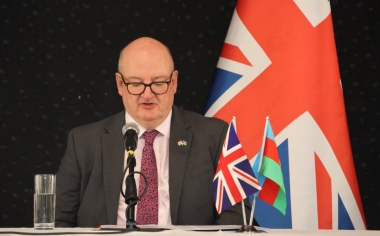
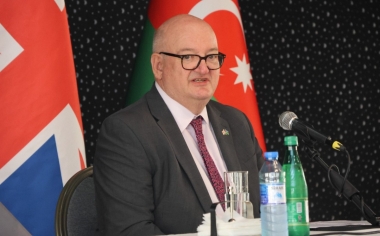
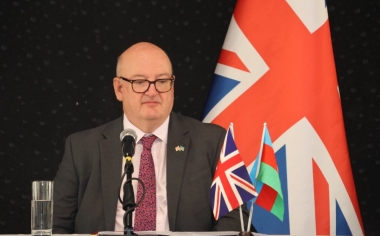
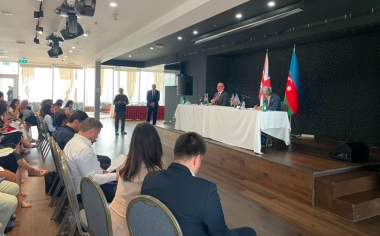
A roundtable was held on the implementation of the 2025–2030 State Program for the Improvement of Transport Infrastructure in Baku and Surrounding Areas, highlighting the progress achieved in the previous year.
The event highlighted that out of the projects listed in the State Program concerning road infrastructure, 25 involve the construction of road infrastructure. Current construction is underway on four of these projects, including the Bilgah – Novkhani – VAZ Circle – Khirdalan – M-4 route, the academician Hasan Aliyev – Koroghlu Metro Station road, Khagani Rustamov – Agha Nematulla road, and the VAZ Circle – M-4 Shamakhi Road. This year, construction is planned to begin on four additional roads: Mohammad Khiyabani – Dairavi-1, M-4 – Khirdalan (central) tunnel, Khirdalan Circle, and Abdulvahab Salamzade – Ziya Bunyadov.
A total of over 10 projects are underway to improve and reorganize traffic flow. Efforts have also been made to install and upgrade road signs and lane markings. Within the scope of these efforts, 32,000 road signs and 407 LTP-type information boards have been installed, and 1.7 million square meters of road markings have been completed. A total of 60 projects have been carried out to improve road safety.
In addition, AYNA has carried out a series of improvements in the city’s passenger transport system, including upgrades to the bus fleet and payment system. As a result, the new network has been launched, with eight routes now operational. A total of 395 new buses powered by electric and CNG technologies have been put into service in Baku, Sumgayit, and Absheron. Innovations in fare payment have also been implemented, allowing passengers to pay using bank cards, bringing the total number of buses with cashless payment systems to 1,800, up from 1,000 in 2022. Furthermore, 98 additional buses have been deployed on routes serving Sumgayit city and Saray settlement, increasing passenger transport capacity by 40,000 people. To ensure regular bus intervals, a network of dedicated bus lanes has been established in Baku, spanning approximately 114 kilometers across nearly 40 streets and avenues.
Based on the results of the past four years, passenger transport by bus in Baku and surrounding areas has increased by a total of 67.3 million. The number of buses operating on daily routes has increased by 32%. While 1,720 buses were deployed daily in 2022, 1,950 in 2023, and 2,160 in 2024, the current number is around 2,300.
The share of cashless fare payments has reached 85%, while eco-friendly buses now account for 55% of the fleet.
Efforts have also been undertaken to restore the tram line. An initial feasibility study for the tram route from Mehdiabad settlement to the “28 May” Metro Station has been completed, and design work is currently underway. Considering the planned tram line, the road cross-section along the route within “Sea Breeze” has been agreed upon.
To promote active mobility, micromobility and pedestrian infrastructure are also being expanded. Currently, the micromobility lane network spans 60.3 kilometers, with a target of 100 kilometers. As part of these efforts, 700 parking stations for scooters and 564 for bicycles have been established. At present, 4,900 scooters and 2,200 bicycles are available for rent. In 2025, approximately 405,000 users utilized the micromobility rental services, completing 3.74 million trips and covering a total distance of 10.6 million kilometers. Micromobility accounts for 12% of all trips starting and ending in the city center made with private transport (cars, taxis, and micromobility vehicles).
In addition, a state standard outlining general requirements for sidewalks and pedestrian pathways has been approved. Numerous measures are being taken to make Baku a comfortable and safe city for pedestrians. Streets are being pedestrianized, and new pedestrian zones are being created or expanded. Vehicle access has now been restricted around Khagani Park, Icherisheher, and Aziz Aliyev Street. Pedestrian and micromobility zones have been established in these areas. Vehicle access on several central streets (Z. Aliyeva, T. Aliyarbayov, H.Z. Taghiyev, Y. Mammadaliyev, and A. Alizade Streets) has been restricted on weekends and public holidays, allowing these streets to be fully accessible to pedestrians. Additionally, pedestrian infrastructure has been improved in the area in front of the “28 May” Metro Station.
As part of the development of pedestrian zones (corridors) in Baku, improvement and construction work is currently underway on Islam Safarli Street. The project aims to optimally connect two major pedestrian areas in the capital: Fountains Square and “Winter Park”, ensuring safe and convenient walking routes for residents and city visitors. Additionally, this year a large-scale project will be implemented on Tabriz Street, designed to enhance accessibility and comfort for both pedestrians and micromobility users.
In line with the State Program, railway transport infrastructure is also being upgraded. During the roundtable, information was provided on the implementation of these projects. It was noted that one of the key routes facilitating travel for residents across Baku, Sumgayit, and the wider Absheron Peninsula is the Absheron Circular Railway, which operates on two lines: Baku – Khirdalan – Sumgayit and Baku – Pirshaghi – Sumgyait. In recent years, significant improvements have been made to the route, including an increase in the number of trips. To enhance the quality of railway services, digitalization measures have been implemented: ticket sales are now available online, a mobile application has been launched, and stations and stops have undergone modernization.
As a result, weekday passenger numbers on the Absheron Circular Railway have increased from 36,000 to 43,000 per day, reflecting the improvements in service quality and passengers’ preference for safe, convenient, and uninterrupted travel by train.
To enhance railway transport infrastructure in the suburban areas of Baku city, the restoration of Yeni Surakhani – Hovsan, Bakikhanov – Bina – Gala, and Zabrat – Mashtaga – Baghlar lines are planned, along with the renovation of existing stations and the construction of new ones along these routes.
In 2025, an analysis of road and railway infrastructure along these lines was conducted, and designing work commenced, with some projects already completed.
Furthermore, stations and stops along the restored lines have been optimized, and their locations finalized.
Work has also commenced to upgrade the Baku–Khirdalan–Sumgayit railway line, further increase train operations and passenger transport capacity, and put new stops into service. At present, construction of the Darnagul stop is underway as part of efforts to further enhance passenger transport services along this line, with approximately 60% of the construction work already completed. In addition, plans include providing a stop at the Bash Keshla station and construction a new Binagadi stop.
The modernization of the Baku–Pirshagi–Sumgayit line is planned, including increasing the railway line’s train operations and passenger transport capacity, as well as commissioning new stops. Along this line, the establishment of railway stops in the settlements of Kurdakhani, Fatmai, and Saray is also planned.
As part of the ongoing measures, the introduction of a train stop at Narimanov station is also planned.
One of the priorities arising from the State Program is the restoration of the Guzdek – Garadagh line. Once this railway line is restored, the movement of freight trains along this route will allow for an increase in passenger train services on the Baku – Khirdalan – Sumgayit line.
Furthermore, the plan includes procuring 20 new passenger trains by 2030. Activities are currently underway, with analyses being carried out and consultations held with international companies.
Under the State Program, significant steps have been taken to expand and modernize the infrastructure of the Baku Metro.
During the roundtable, it was highlighted that in 2025, innovative and efficient solutions were implemented for the first time across various areas of the Metro. Notable progress in passenger transport and safe operations indicates that, in line with the State Program, the next five years will mark a phase of substantial improvements and innovations for the Baku Metro. To support the implementation of the program, global cooperation has been initiated with the Asian Infrastructure Investment Bank (AIIB) and the Asian Development Bank (ADB).
In line with the program signed in 2025, the construction of the Darnagul electric depot has resumed after many years. Excavation work has begun at two shafts, which are a key component of the track separation project at the “28 May” Metro Station. At the same time, following the Icherisheher Metro Station, the area for the construction of a turn-back facility has been prepared in coordination with the relevant authorities, ensuring readiness for on-site construction. Reconstruction work on the tail track at Hazi Aslanov station has also progressed to the next phase.
The construction of 10 new stations will represent one of the largest and fastest expansion phases in the history of the Baku Metro. One of these stations is planned to be commissioned in 2026, while repair and construction work at the station under the “B4 Project” have continued at an accelerated pace over the past year.
One of the most significant innovations implemented last year was the reduction of train intervals for the first time in 16 years, which, considering the existing infrastructure, is regarded as a revolutionary change. Additionally, thanks to the implementation of digital solutions, a system and electronic displays showing train arrival times at stations have been installed for the first time, and contactless (NFC) bank card payment has been enabled at all stations. Notably, within just two months of its trial launch in October, the system was used by over 7 million passengers.
Measures to upgrade safety and energy systems have continued at a rapid pace. In 2025, the acquisition of state-of-the-art trains was continued to enhance service quality and ensure optimal safety in operations. During the year, 20 new next-generation train cars were put into operation in the Baku Metro.
The installation of tactile strips at over 20 stations has improved accessibility for mobility-impaired passengers, resulting in a 10.6% increase in the use of the “Accessible Metro” service compared to the previous year.
Another significant step to enhance accessibility was the launch of a new-format Contact Center at the Baku Metro, operating from 07:00 to 23:00 to respond promptly to passenger inquiries and further improve service quality.
In 2025, the Baku Metro continued to uphold public trust in public transport by carrying 227 million passengers. During the year, the Metro operated in enhanced service mode for 60 days, and on special occasions, an additional 14-hour service schedule was implemented.
The measures undertaken in 2025 have laid a solid foundation for the future development of the Baku Metro. Expanding metro services that meet modern standards while ensuring safety and efficiency will continue to be a key priority in the coming period.
In conclusion, questions of interest to experts and journalists were answered, and discussions were held.











Ən son xəbərləri səhifəmizdən də izləyin